Cell cycle
 | |
Mitosis
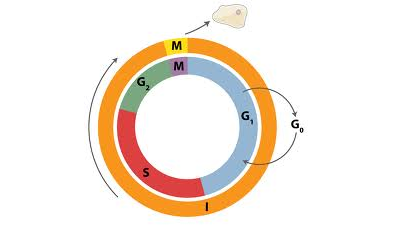
The cell cycle consists of 5 phases. G1, S, and G2 (collectively called interphase), and M (mitosis). The additional phase is called G0. Interphase is concerned with preparing the cell for cell division, whereas mitosis refers to the actual cell division.
Resting state
- G0 (Gap 0) - This is a resting phase where the cell has stopped dividing.
Interphase
- G1 (Gap 1) - This phase is concerned with preparing the cell for DNA synthesis.
- S (synthesis) - DNA replication occurs during this stage
- G2 (Gap 2) - This phase is concerned with preparing the cell for mitosis
Mitosis
- Prophase - Chromatin condenses and becomes visible as chromosomes
- Prometaphase - The nuclear membrane dissolves and microtubules become attached to the centromeres
- Metaphase - Chromosomes become aligned at the middle of the cell
- Anaphase - Paired chromosomes separate and begin moving to opposite ends of the cell
- Telophase - Chromatids arrive at opposite poles of the cell and new nuclear membranes begin to form around them
- Cytokinesis - The cell splits into two daughter cells each with a nucleus
Meiosis
Meiosis is a special type of cell division necessary for sexual reproduction. Meiosis is divided into meiosis I and meiosis II and passes through the following stages:
- Prophase I (homologous recombination)
- Prometaphase I
- Metaphase I
- Anaphase I
- Telophase I
- Cytokinesis
- prophase II
- Prometaphase II
- Metaphase II
- Anaphase II
- Telophase II
- Cytokinesis


